Kettlebell vs dumbbell: which should you buy first?

Contains affiliate links. Our policy.
The kettlebell vs dumbbell question has one honest answer, and it is a split: buy the kettlebell if you want a single object that trains a hip hinge and raises your heart rate, and buy adjustable dumbbells if you want to add muscle to specific areas with fine control over the load. No trial has compared the two for a first purchase. We earn a commission on purchases made through links on this page, at no cost to you.
That split is mechanical reasoning and our editorial judgement, and we want to label it as such up front: we have found no randomised trial comparing kettlebell training with dumbbell training, in beginners or anyone else. What exists is a handful of small electromyography studies comparing the implements on single exercises, one six-week training trial that used a barbell rather than a dumbbell, and a body of biomechanics describing what the kettlebell does that other weights do not.
So this page tells you what actually differs, with measurements where they exist, then makes a buying call and labels which parts are evidence and which are us. If kettlebells are not yet a settled direction for you, our kettlebell training guide for beginners is the better starting point.
One caution belongs up here rather than in a footer. Kettlebell ballistics load the lower back in a pattern barbell and dumbbell lifts do not, and if you have a history of back or shoulder pain, that decision belongs with a clinician rather than a buying guide.
What actually differs: offset load vs balanced load
The mechanical core is one sentence: a dumbbell's mass sits in line with your hand, a kettlebell's hangs below and behind it.
Dicus and colleagues, in the International Journal of Exercise Science, put that precisely for the overhead press: "When performing an overhead press, the center of mass of a dumbbell is in line with the glenohumeral joint," whereas "the center of mass of the kettlebell is posterior to the glenohumeral joint." They expect that "Posterior displacement of the kettlebell center of mass may result in less stability during the pressing motion."
Then the obvious prediction breaks: across 21 subjects pressing equal loads, the implement producing more activation in the prime mover was the stable one. The paper reports a statistically significant increase in normalised EMG activity in the anterior deltoid with the dumbbell, 63.3 plus or minus 13.3 percent, against 57.9 plus or minus 15.0 percent for the kettlebell, and concludes that "EMG activity was augmented in the anterior deltoid when using the more stable implement, the dumbbell."
The second study points the other way. Blazkiewicz and Hadamus, in Sensors had 20 young men press 6kg and 70 percent of one-rep max seated, and found "No significant differences were found in the activation of assessed muscles" between implements — though "muscle activity of all muscles except the upper trapezius was always higher for kettlebell pressing." They attribute that gap to the kettlebell's centre of gravity sitting below the grip, creating rotational torque that needs more muscle activity to control.
Two small studies, opposite directions, neither decisive. Read the limits: 21 and 20 participants, one exercise each, and samples that are not the same — Dicus pressed 14 college-aged men and 7 women at 25 percent of one-rep max, the Sensors study used 20 trained young men only. No maximum voluntary contraction was assessed in the Sensors study, and the loads were light in both. That paper's own conclusion that kettlebell exercises are more effective is, in our reading, stronger than its non-significant comparison supports.
Our summary, as judgement rather than finding: the offset load changes how hard an object is to control, not how much muscle it builds per pound. It is a feature when controlling the object is the point, and a tax when loading a muscle is.
What the research says about transfer
The nearest thing to a head-to-head training trial swapped the dumbbell for a barbell.
Otto and colleagues, in the Journal of Strength and Conditioning Research, randomly assigned 30 men to six weeks of weightlifting (high pulls, power cleans, back squats) or kettlebell training (swings, accelerated swings, goblet squats), twice a week. Their conclusion: "6 weeks of weightlifting induced significantly greater improvements in strength compared with kettlebell training." On body size, both arms came up empty: "Neither method of training led to significant changes in any of the anthropometric measures."
Now the limits. Six weeks is short, 30 men is a small sample, and maximum strength was tested with the back squat — which only one group trained. The two arms also differed in load, not just implement: the kettlebell group trained throughout with a single fixed 16kg (35lb) bell, about 20 percent of body mass, and that confound is one later reviewers raise rather than one the paper's abstract reports. Most important: a barbell is not a dumbbell, so this trial does not answer the question in the title. It says heavier, more specific loading produced more strength on the tested lift — a statement about load rather than implements.
That reading is consistent with the broader guidance. ACSM's summary of its 2026 position stand on resistance training prescription reports that "using specific types of equipment (machines vs. free weights)" did not consistently affect outcomes for the average healthy adult, and states that "Traditional gym settings are not needed to see results."
Where the kettlebell wins
The kettlebell's case is the hinge, the ballistic and the carry — movements where the offset mass and the swinging arc are the exercise rather than an obstacle.
- It produces a large hip demand from a small weight. McGill and Marshall recorded swings producing "80% MVC for the gluteal muscles with a 16-kg kettlebell" alongside "about 3,200 N of low back compression" in seven male subjects. A 16kg (35lb) object asking 80 percent of a maximal contraction from the glutes is a good ratio of weight bought to demand delivered.
- It loads the spine in a way other weights do not. The same paper found "the posterior shear of the L4 vertebra on L5, which is opposite in polarity to a traditional lift" — an interplay "not observed during low back extension dominant exercises such as lifting a bar, or squatting." Read that as a difference, not a benefit: the authors conclude it "may be contraindicated for some individuals with spine shear load intolerance."
- The bottoms-up position is kettlebell-only. McGill and Marshall list "enhanced activation of the core musculature during the bottoms-up carry" among the implement's unique opportunities, and Paköz and colleagues found the bottoms-up overhead press beat the traditional press "in the upper trapezius, lower trapezius, biceps brachii, and infraspinatus" in 20 healthy males, all at p below .050. You cannot balance a dumbbell upside down.
- One object covers a whole session. Swings, goblet squats, presses, rows and carries, with nothing to change between them: conditioning circuits get written for bells.
What the kettlebell does not win is size: as we set out in can kettlebell training build muscle, the published hypertrophy evidence for bells is thin and mostly from detrained older adults.
Where the dumbbell wins
The dumbbell's case is load control, and it is mostly an argument about arithmetic rather than anatomy.
- Stability is a feature when you are loading a muscle. Dicus and colleagues found higher anterior deltoid activation with the dumbbell, and attributed it to the dumbbell being the more stable implement. If the point of a press is to make the deltoid work, an object that does not also tax wrist and shoulder stabilisation may let more of your effort land on the target.
- It covers the exercises bells are awkward for. Bench and incline pressing, curls, lateral raises, skull crushers, split squats and lunges. Most of the upper-body isolation menu assumes a balanced handle.
- Pairs are the default. Two matched dumbbells load both sides at once, doubling the weight on your weakest pattern.
The honest concession: a dumbbell does more kettlebell work than people assume. Paköz and colleagues report that "In the swing category, activation patterns were largely comparable between the two-hand kettlebell and dumbbell swings." Twenty young men and shoulder muscles only, so do not over-read it — but if swinging is one item on a longer list, a dumbbell is not disqualified. Whichever implement you land on, it helps to know the loads you are aiming at before you buy: estimate your max from a set you have already finished and the percentage you need for a given rep bracket falls straight out of it.
Cost and space per unit of progress: kettlebell vs dumbbell for a home gym
Progressive overload needs small steps. The 2009 ACSM position stand Progression Models in Resistance Training for Healthy Adults recommends that "a 2–10% increase in load be applied when the individual can perform the current workload for 1–2 repetitions over the desired number on two consecutive training sessions."
Fixed kettlebells do not step that finely. The 2019 scoping review by Meigh and colleagues in BMC Sports Science, Medicine and Rehabilitation notes that competition kettlebells are "most commonly available from 8 kg to 32 kg in 2-4 kg increments," with the wider market running "from 2 kg to 92 kg." A 4kg step up from 16kg (35lb) is 25 percent — two and a half times the top of ACSM's range.
Cast-iron lines in pounds do better and still miss. The Marcy line is sold in 5lb steps from 10 to 55 pounds, so moving off a 20lb bell is a 25 percent jump; off a 50lb bell it is 10 percent, exactly the top of the band.
That is the real pattern, and it is the opposite of the usual framing: the increment problem is worst at the light end, which is precisely where a beginner lives. It eases as you get stronger.
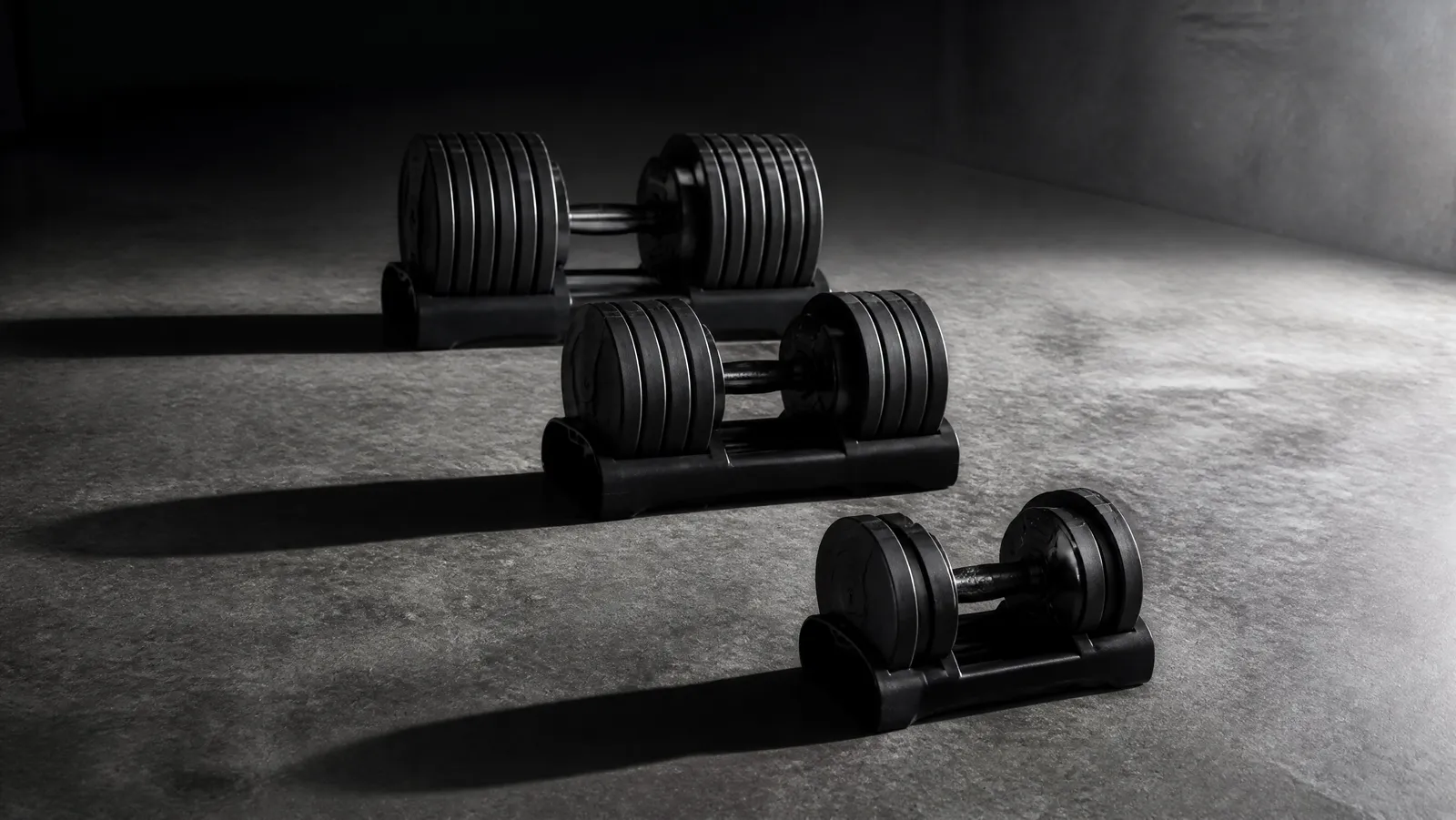
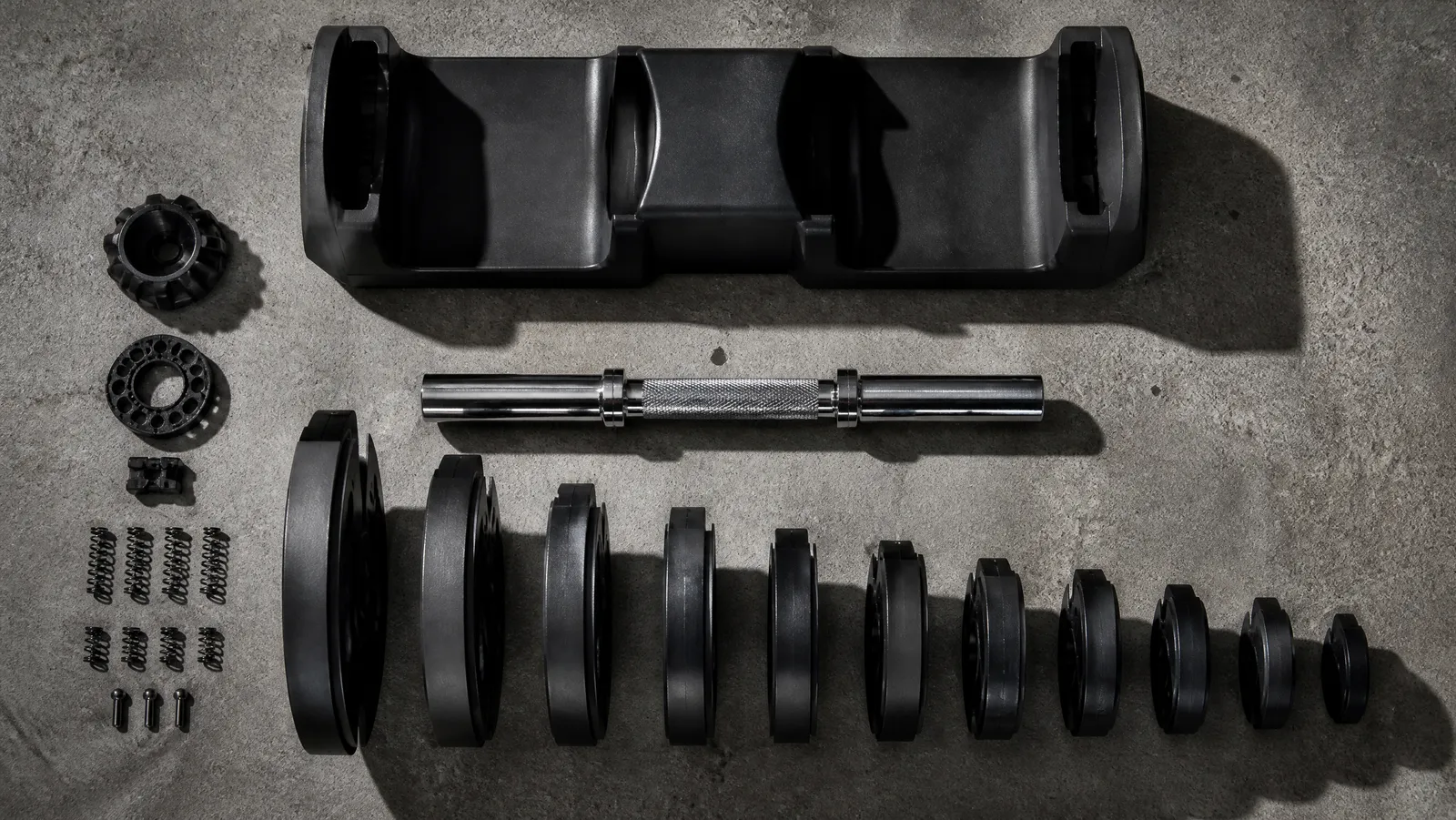
Adjustable dumbbells attack it from the other side. The Yagud set, in the 50lb configuration, covers 4lb to 50lb across 12 increments — roughly 4lb a step. At 50lb that is an 8 percent jump, inside ACSM's band; at 20lb the same 4lb is about 20 percent, outside it. Adjustables are not magic at the bottom either; they stop being a problem sooner.
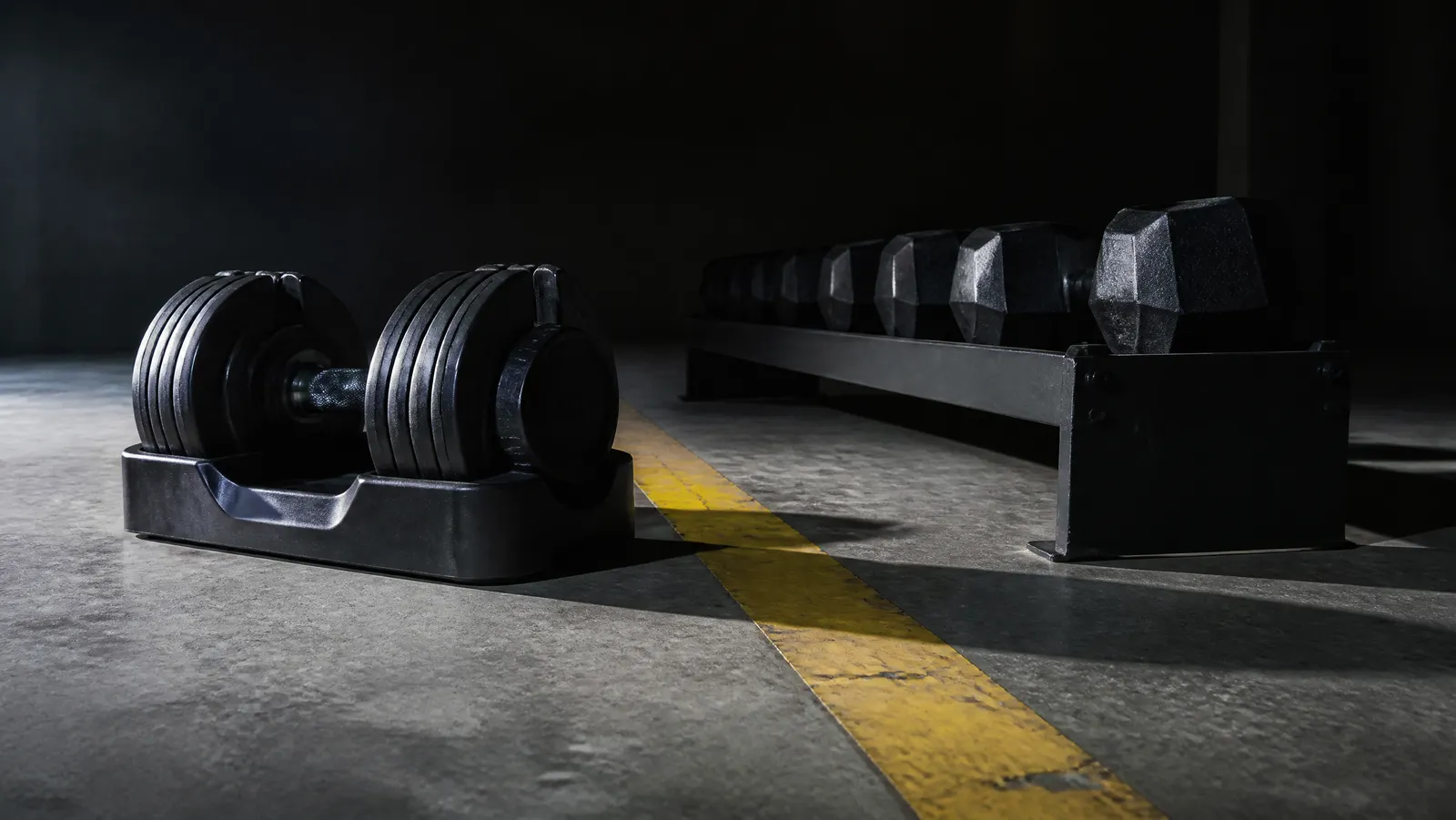
Money and floor space diverge sharply. One bell is cheap and permanent: a single cast-iron kettlebell runs about $20 to $30 as of October 2026, and a three-bell set covering 10, 15 and 20lb is $82.99 as of October 2026. An adjustable pair costs more up front — $227.99 as of October 2026 for the Yagud set — and replaces a rack. Footprints are small either way — the Yagud listing gives its dimensions as 15.94 x 7.87 x 8.31 inches, and a 15lb bell takes 7 x 4 x 7.5 inches.
Our arithmetic, as ours: if you expect to still be training in two years, the adjustable pair is cheaper per usable load step. If you are not sure you will train at all next month, one bell is the smaller bet. We work through how far a single bell gets you in is one kettlebell enough.
Which to buy first, by goal: kettlebell or dumbbell for beginners
Five cases. Every product fact below comes from the current listing.
If you want conditioning, hinging and one object: buy a bell. Our pick is the Marcy Hammertone 20lb at $28.99 as of October 2026, mostly for the ladder behind it — the line runs 10 to 55 pounds in 5lb steps, so your second bell is a decision rather than a search — plus a limited two-year manufacturer guarantee. According to Marcy, the cast iron carries a non-rust coating and the handle is built to stay secure — the maker's claims, untested by us. For choosing a starting weight, best kettlebells for beginners has the sizing argument.
If you are not sure you will like it: spend $20.66. The Amazon Basics 15lb cast iron kettlebell is $20.66 as of October 2026, with a textured wide handle for one or two hands, measuring 7 x 4 x 7.5 inches. Amazon Basics' own listing warns that the powder-coated finish may chip or crack if the bell is dropped on hard surfaces or struck against other weights, and asks you to inspect the handle before each use and stop if damaged coating exposes bare metal edges. For a bell that will live on a concrete floor, that is a real caveat.
If you already know you want bells: buy the progression now. The Yes4All set of 10, 15 and 20lb bells is $82.99 as of October 2026 — solid cast iron with no welds or seams, a corrosion-resistant finish, wide smooth handles and a flat bottom for push-ups. Three bells means the next step up is already in the box rather than another order — though at this end of the ladder a 5lb step is still a 50 percent jump from 10lb and 33 percent from 15lb.
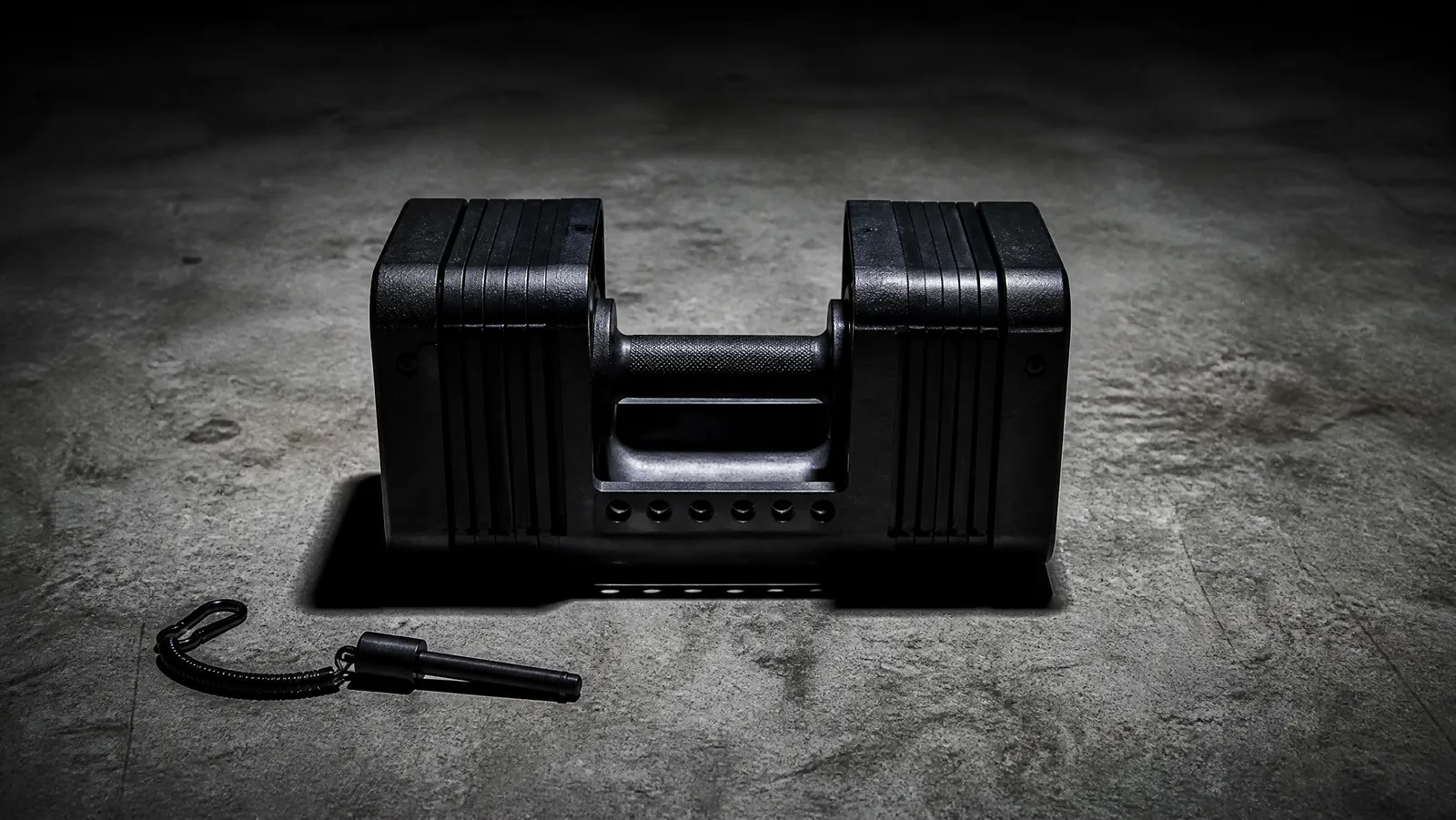
If you want to add muscle to specific areas: buy adjustable dumbbells. Our pick is the Yagud adjustable set at $227.99 as of October 2026. Read the configuration carefully, because the listing covers more than one: the version at this price is the 50lb build, adjusting from 4lb to 50lb across 12 increments by rotating the handle one-handed. Its safety lock only permits a weight change while the dumbbell is docked on its tray, and the listing gives its dimensions as 15.94 x 7.87 x 8.31 inches.
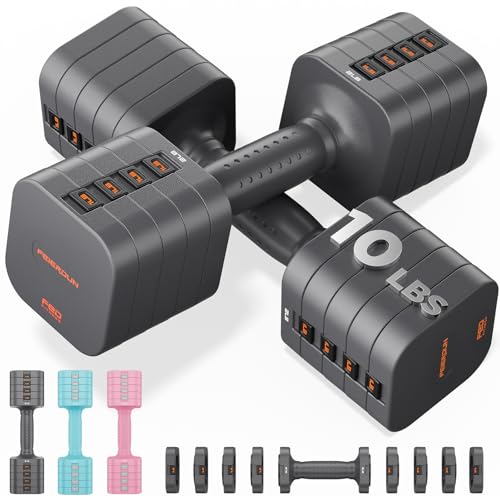
If the budget or the room is very tight: the FEIERDUN 5-in-1 pair is $69.97 as of October 2026, five settings per dumbbell adjusting from 2lb to 10lb each. Be clear what that means — 10lb in each hand, 20lb for the pair, not 20lb per hand. The square bodies do not roll, convert to a push-up mode, and store in under 0.2 sq ft. A light-load tool for pressing and accessory work, not a lower-body set.
Adjustable kettlebells exist as a further option; we have not reviewed them, so we are not recommending one here.
Are kettlebells better than dumbbells? The honest verdict
Neither is better. They fail at different points, and those failure points are what you are choosing between.
The kettlebell fails on increments. It gives you a large hip demand for a small, cheap object, a conditioning tool that needs no setup, and one position — bottoms-up — no dumbbell can copy. Then it asks you to progress in 25 percent jumps at the exact weight where you are weakest.
The dumbbell fails on cost and character. It steps in roughly 4lb increments, covers the isolation menu and loads both hands at once. Then it charges several times the price of a bell and gives you no reason to learn a hinge.
So: one object that trains a hinge and raises your heart rate, buy the kettlebell. Muscle in specific areas with fine control over load, buy the adjustable dumbbells. We have found no trial testing that recommendation, and we would rather say so than dress a reasonable split up as a finding.
One last note on the health question. Research suggests the swing may be a useful hip exercise for many people, and McGill and Marshall's own conclusion is that it "may be contraindicated for some individuals with spine shear load intolerance." If you have a history of back or shoulder pain, are pregnant, or are working through an injury, get individual clearance before swinging anything. Nothing on this page is a substitute for that conversation, and we cannot tell you which implement is safe for your back.
For the training that goes on top of whichever you buy, kettlebell training for beginners is where this series starts.
Gear we'd put on our own floor
The Picks

Marcy Hammertone 20 lb Kettlebell — our first-bell pick
Our first-bell pick at 20lb.
Price as of
Our first-bell pick at 20lb. According to Marcy, the hammer-tone cast iron carries a non-rust coating and the handle is shaped to stay secure in the hand — that is the maker's copy, not something we have tested. What is checkable is the ladder: the line is sold in 10, 15, 20, 25, 30, 35, 40, 45, 50 and 55 pound sizes, so a second bell is a 5lb step rather than a guess, and it carries a limited two-year manufacturer guarantee. Price as of October 2026.

Yagud Adjustable Dumbbell Set — our first-dumbbell pick
Our first-dumbbell pick, in the 50lb configuration this listing resolves to: 4lb to 50lb across 12 increments, selected by rotating the handle with one hand.
Price as of
Our first-dumbbell pick, in the 50lb configuration this listing resolves to: 4lb to 50lb across 12 increments, selected by rotating the handle with one hand. The safety lock only allows a change of weight while the dumbbell is docked on its included tray, and the listing gives the dimensions as 15.94 x 7.87 x 8.31 inches. This is the entry on this page best placed to keep meeting a load target as you get stronger. Price as of October 2026.

Amazon Basics 15 lb Cast Iron Kettlebell — cheapest way to test the idea
The cheapest way on this page to find out whether you actually enjoy swinging a bell: one 15lb cast iron kettlebell with a textured wide handle that takes one or two hands, measuring 7 x 4 x 7.
Price as of
The cheapest way on this page to find out whether you actually enjoy swinging a bell: one 15lb cast iron kettlebell with a textured wide handle that takes one or two hands, measuring 7 x 4 x 7.5 inches. Amazon Basics' own listing warns that the powder-coated finish can chip or crack if the bell is dropped on a hard surface or struck against other weights, and asks you to inspect the handle before each use. Price as of October 2026.
FEIERDUN 5-in-1 Adjustable Dumbbell Set — cheapest adjustable pair
The cheapest adjustable pair here, and also the lightest: two dumbbells with five settings each, adjusting from 2lb to 10lb per hand in about a second.
Price as of
The cheapest adjustable pair here, and also the lightest: two dumbbells with five settings each, adjusting from 2lb to 10lb per hand in about a second. That is 10lb in each hand and 20lb for the pair — read the listing's weight figures carefully, because it is not 20lb per hand. The square bodies do not roll, convert to a push-up mode, and store in under 0.2 sq ft. Price as of October 2026.

Yes4All Cast Iron Kettlebell Set — buy the progression up front
Three bells — 10, 15 and 20lb — for readers who already know they want kettlebells and would rather not order one at a time for the next six months.
Price as of
Three bells — 10, 15 and 20lb — for readers who already know they want kettlebells and would rather not order one at a time for the next six months. Solid cast iron with no welds or seams, a corrosion-resistant black paint finish, wide smooth handles sized for a two-handed grip, and a flat bottom so they sit still for push-ups and rows. Price as of October 2026.
Our top three, ranked
The Leaderboard
Marcy Hammertone 20 lb Kettlebell — our first-bell pick
Our first-bell pick at 20lb.
Check PricePrice as of
Yagud Adjustable Dumbbell Set — our first-dumbbell pick
Our first-dumbbell pick, in the 50lb configuration this listing resolves to: 4lb to 50lb across 12 increments, selected by rotating the handle with one hand.
Check PricePrice as of
Amazon Basics 15 lb Cast Iron Kettlebell — cheapest way to test the idea
The cheapest way on this page to find out whether you actually enjoy swinging a bell: one 15lb cast iron kettlebell with a textured wide handle that takes one or two hands, measuring 7 x 4 x 7.
Check PricePrice as of
What to know before you buy
Field Notes
Should a beginner buy a kettlebell or dumbbells first?
Buy the one matching the training you will actually do: a bell if you want one object for hinging and conditioning, adjustable dumbbells if you want to add load in small steps. We have found no randomised trial comparing kettlebell training with dumbbell training in beginners, so that split is mechanical reasoning rather than evidence. What evidence exists points away from the implement being the deciding factor at all. [ACSM's summary of its 2026 position stand on resistance training](https://acsm.org/resistance-training-guidelines/) reports that "using specific types of equipment (machines vs. free weights)" did not consistently affect outcomes for the average healthy adult, and states flatly that "Traditional gym settings are not needed to see results." The nearest head-to-head training study used a barbell, not a dumbbell: [Otto and colleagues in the Journal of Strength and Conditioning Research](https://pubmed.ncbi.nlm.nih.gov/22344061/) found that "6 weeks of weightlifting induced significantly greater improvements in strength compared with kettlebell training" in 30 men.
Can you do kettlebell swings with a dumbbell?
For the two-handed swing, the measurements so far say the two implements look much the same. [Paköz, Isiklar and Turgut, in Physiotherapy Theory and Practice](https://acikerisim.fbu.edu.tr/entities/publication/4e94187d-b197-4bc6-a53e-461181dd3dc9/full) recorded surface EMG from 20 healthy males, mean age 22.6 years, across a range of kettlebell, dumbbell and elastic band exercises, and report that "In the swing category, activation patterns were largely comparable between the two-hand kettlebell and dumbbell swings." Their overall conclusion is that "Kettlebell, dumbbell, and elastic band exercises elicit distinct shoulder muscle activation profiles," and the one-hand kettlebell swing did produce greater activation in selected muscles. Read the limits: 20 young men, shoulder muscles only, surface EMG measures activation rather than strength gained, and the absolute differences between exercises were modest. A dumbbell held by one end is also physically harder to grip at the top of a backswing, which is our observation rather than anything that study measured.
Are kettlebells harder on your lower back than dumbbells?
They load it differently, and whether that suits you is a clinical question rather than one this page can settle. [McGill and Marshall, in the Journal of Strength and Conditioning Research](https://www.backfitpro.com/medical-scientific-articles/2012/%5B63%5DMcGill,S.%282012%29Kettlebell-swing-snatch-and-bottoms-up-carry%5BJ.Strength-Condit.Res.%5D.pdf) measured seven male subjects swinging a 16kg (35lb) bell and found "the posterior shear of the L4 vertebra on L5, which is opposite in polarity to a traditional lift." They describe this interplay as one "not observed during low back extension dominant exercises such as lifting a bar, or squatting," and note that "Compared with more traditional lifting tasks, such as lifting a bar during a deadlift, the ratio of compression to shear is quite different." Their practical conclusion is the careful one: "this training approach may be contraindicated for some individuals with spine shear load intolerance." They also observed that "a few powerlifters have no complaints lifting a bar but experience low-back discomfort during the kettlebell swing." Seven subjects and one bell weight is a small measurement, not a risk estimate. Anyone with a history of back pain should be assessed by a clinician before swinging.
Who put in the work
The Coach
Your Coach
Darlene Schmitt
I am a fitness instructor and promoter who truly enjoys helping others become the best they can be! My mission is to help people find the love of fitness and to help them develop a lifelong habit of exercise. I am a firm believer that fitness should be fun, and I make it my mission to ensure that my classes are always enjoyable. I am also a certified nutritionist and personal trainer, so I am able to offer my students comprehensive and well-rounded support.